


Understanding HR Compliance: A Guide for Businesses

Updated: Sep 7
The Importance of Proactive HR Compliance
HR compliance works best when it is managed before there is a problem. Compliance is not just a once-a-year checklist; it is a daily operating practice that touches hiring, onboarding, pay, benefits, leave, performance management, safety, terminations, and recordkeeping.
For many smaller organizations, the challenge is capacity. One person may be handling payroll questions, employee relations, recruiting, training, and policy updates. Managers may know the business well but have limited training in employment rules. Documentation may live in email threads, paper folders, payroll systems, and shared drives.
That creates risk because HR compliance depends on consistency. When records are scattered or decisions vary by department, it becomes harder to show that the organization followed its own policies and treated employees fairly.
Common HR compliance responsibilities include:
Good compliance work creates a clear trail. If a question comes up later, the organization can show what happened, when it happened, who was involved, and how the decision matched policy.
That kind of preparedness is not about being defensive. It is about creating fair, predictable practices that support both the business and its employees.
The Risks of Audits, Investigations, and Legal Actions Can Grow Quickly
Most business leaders do not expect an HR issue to become formal. An employee complaint may start as a pay question. A leave dispute may begin with a missed email. A termination challenge may come from a former employee who believes the decision was unfair.
Once an outside agency, attorney, or auditor becomes involved, the organization needs more than memory. It needs records, timelines, policies, payroll data, job descriptions, notices, personnel files, and proof that leaders followed fair procedures.
Audits Can Expose Gaps That Were Easy to Miss
Audits may focus on wage and hour practices, employee classification, Form I-9 compliance, benefits, safety records, or payroll documentation. Even when a business has good intentions, incomplete files or inconsistent practices can create serious concerns.
An audit can require time-sensitive responses and detailed records. If documents are missing, outdated, or hard to locate, the process becomes more stressful. Leaders may need to reconstruct events, explain inconsistent decisions, or correct issues under pressure.
The best time to prepare for an audit is well before one is announced.
Investigations Can Test the Strength of Internal Processes
Employee complaints about harassment, discrimination, retaliation, pay, leave, or safety concerns need careful handling. A weak investigation process can create added risk, especially if the organization delays action, fails to document steps, or allows managers to respond without guidance.
A sound investigation process should include:
A prompt response to the concern
A neutral fact-gathering approach
Clear notes and secure documentation
Protection against retaliation
A consistent decision-making process
Follow-up when needed
When an organization can show that it took concerns seriously and responded in good faith, it is in a stronger position.
Legal Actions Can Be Costly Even When the Business Acted Properly
Employment claims can involve attorney time, settlement discussions, leadership distraction, employee morale concerns, and reputational strain. Even if the organization has strong facts, defending a claim can take resources away from normal business priorities.
The risk increases when documentation is thin. For example, a manager may say an employee was terminated due to repeated performance issues. If the file contains strong performance reviews, no coaching notes, and no written expectations, the organization may struggle to support that explanation.
Clear records do not guarantee that problems will never happen, but they give the organization a stronger foundation when questions arise.
Proactive Support from Amplified Human Resources Reduces Uncertainty
Many HR risks come from timing. A policy is reviewed after an issue occurs. A manager asks for guidance after a difficult conversation. A file is checked after a complaint has already been filed.
Proactive support changes that pattern.
Amplified Human Resources can help organizations look ahead, identify gaps, and create practical systems that fit the size and needs of the business. This kind of support is especially valuable when internal teams are stretched or when HR responsibilities are shared across leaders who also manage operations, finance, or administration.
A proactive HR partner can assist with work such as:
Reviewing handbooks and policies for clarity and consistency
Building onboarding and offboarding checklists
Auditing personnel files for missing or outdated documents
Reviewing job descriptions and classification concerns
Supporting manager training on documentation and employee relations
Helping create investigation procedures
Advising on leave, discipline, and termination processes
Preparing records and practices before an audit or claim occurs
For many businesses, the biggest benefit is confidence. Leaders do not have to guess whether a process is current or whether a decision has been documented well. They have a structure to follow and a trusted resource to call before small issues become larger ones.
Working with an HR Consultant can also give internal teams an outside perspective. That perspective can be useful when habits have formed over time, when policies no longer match actual practice, or when leaders need help making consistent decisions across departments.
This support should feel practical, not overwhelming. The goal is not to bury managers in paperwork. The goal is to build simple habits that make compliance part of normal business operations.
Practical Ways to Stay on Top of HR Compliance
A strong compliance program does not need to be complicated. It needs to be current, consistent, and visible. Small improvements, repeated over time, can reduce risk in a meaningful way.
Keep Policies Current and Easy to Use
Employee handbooks and standalone policies should match actual workplace practices. If the handbook says performance reviews happen every year, they should happen. If the attendance policy requires written warnings, managers should follow that process.
Review policies at least annually and whenever there are major changes in law, staffing, benefits, remote work arrangements, or business operations.
Pay close attention to policies involving:
Anti-harassment and discrimination
Retaliation
Wage and hour practices
Timekeeping
Leave and accommodations
Attendance
Discipline
Safety
Remote or hybrid work
Data privacy and confidentiality
Policies should be written in plain language. Employees and managers need to understand what is expected, how to raise concerns, and where to go for help.
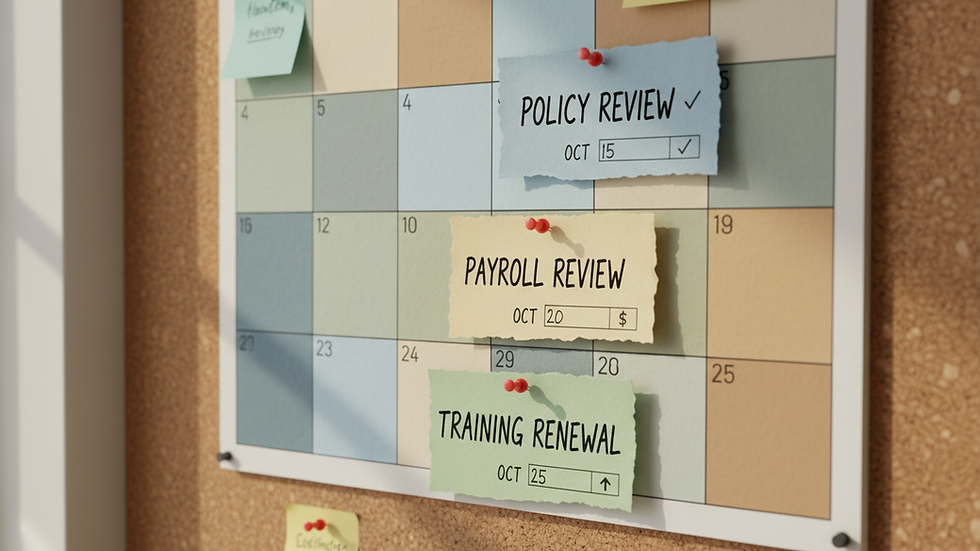
Build a Compliance Calendar
A compliance calendar helps prevent last-minute scrambling. It can include recurring deadlines for training, policy reviews, benefits notices, license renewals, payroll checks, safety updates, and file audits.
Make the calendar visible to the people responsible for each task. Assign ownership, not just due dates. A reminder is helpful, but accountability is better.
A simple calendar can track:
Annual handbook review
Quarterly personnel file checks
Required workplace postings
Training renewals
Benefits open enrollment tasks
Payroll and classification reviews
Record retention review dates
Safety or incident reporting reviews
Standardize Documentation
When managers document in different ways, files can become uneven. Some employees may have detailed records, while others have little or none. That inconsistency can create risk.
Use templates for common HR actions, such as coaching notes, written warnings, accommodation discussions, investigation summaries, and termination reviews. Templates help managers capture the right details without turning every conversation into a legal memo.
Good documentation should answer these questions:
What happened?
When did it happen?
Who was involved?
What policy, expectation, or performance standard applied?
What action was taken?
What follow-up was expected?
Keep documentation factual. Avoid sarcasm, assumptions, labels, or emotional language.
Train Managers Before Issues Arise
Managers are often the first to hear employee concerns. They also make day-to-day decisions about schedules, performance, conduct, and time off. That means they need practical training, not just policies in a handbook.
Manager training should cover how to:
Recognize complaints that need escalation
Document performance and conduct concerns
Avoid retaliation
Apply policies consistently
Handle leave and accommodation requests appropriately
Respond to harassment or discrimination concerns
Know when to ask HR for guidance
Training does not need to be long to be useful. Short, focused sessions throughout the year can be more effective than one large annual program.

Review Employee Classifications and Pay Practices
Wage and hour issues can become expensive when they are not reviewed regularly. Misclassification, missed overtime, unpaid work time, meal and rest break issues, and unclear timekeeping rules can all create exposure.
At a minimum, review:
Exempt and nonexempt classifications
Independent contractor relationships
Overtime practices
Timekeeping procedures
Off-the-clock work concerns
Pay deductions
Bonus or commission plans
If supervisors approve timecards, train them to look for red flags rather than treating approval as a routine click.
Prepare Before Terminations
Termination decisions can carry risk, especially when documentation is weak or the employee has recently raised a concern, requested leave, reported misconduct, or participated in an investigation.
Before finalizing a termination, review the file carefully. Confirm the business reason, supporting documentation, policy consistency, final pay requirements, benefits notices, and communication plan.
A pre-termination review does not mean the organization cannot make difficult decisions. It means leaders make those decisions with care.
Accountability Turns Compliance into a Shared Practice
HR compliance cannot sit with one person alone. It works best when leaders, managers, and employees understand their roles.
Accountability starts with clear expectations. Managers should know which issues they can handle and which issues must be escalated. Employees should know how to report concerns. Leaders should model the behavior they expect from the rest of the organization.
A culture of accountability includes:
Clear written policies
Consistent follow-through
Safe reporting channels
Prompt response to concerns
Respectful communication
Fair treatment across teams
Regular review of HR practices
Accountability also means correcting issues when they appear. If a manager skips documentation, address it. If a policy no longer fits the business, revise it. If employees are confused about a process, explain it again.
The goal is progress, not perfection. A business that reviews practices, fixes gaps, and documents decisions is far better prepared than one that waits for an outside complaint to reveal problems.
FAQ
What HR Compliance Tasks Should Small to Medium Businesses Prioritize First?
Start with the areas that create the most risk: wage and hour practices, employee classifications, hiring records, required forms, handbook policies, leave practices, and termination documentation. Once those are stable, build a recurring review schedule.
How Often Should HR Policies Be Reviewed?
A yearly review is a good baseline. Policies should also be reviewed when laws change, the business grows, workplace practices shift, or a recurring employee issue shows that a policy is unclear.
What Records Matter Most During an Audit or Investigation?
The most useful records are complete, dated, and easy to connect to the issue being reviewed. This may include personnel files, payroll records, timecards, job descriptions, policies, training records, complaint notes, investigation summaries, and employee acknowledgments.
Can Proactive HR Support Reduce Legal Risk?
Yes, proactive support can reduce risk by helping the organization find gaps early, apply policies consistently, train managers, and keep better documentation. It cannot prevent every claim, but it can put the business in a stronger position.
How Can Leaders Build Accountability Without Creating Fear?
Focus on clarity and consistency. Explain expectations, train managers, respond to concerns respectfully, and correct issues fairly. Accountability should help people understand what good practice looks like, not make them afraid to ask questions.

Staying Ready is Easier Than Catching Up Later
HR compliance is much easier to manage when it is part of everyday operations. Waiting until an audit notice, employee complaint, or legal letter arrives creates pressure that most businesses do not need.
Proactive support from Amplified Human Resources gives organizations a practical way to stay current, document well, train managers, and strengthen internal accountability. With the right systems in place, compliance becomes less about panic and more about steady, responsible management.
The next best step is simple: review one area of HR risk this week. Start with personnel files, pay practices, or your handbook. Small, steady action now can prevent larger problems later.



Comments